
What should importers ask before working with a China lifting and rigging manufacturer?
Before moving forward with a production contract, importers must verify the factory's compliance with ISO 9001:2015 and their ability to provide 100% proof-load testing videos for every batch. In 2025, 14% of international shipping delays were caused by missing mill test reports (MTR) or incorrect WLL (Working Load Limit) markings on Grade 80 alloy components. Confirming that a china lifting and rigging manufacturer uses automated induction heating ensures a hardness consistency within +/- 2 HRC. This technical verification prevents project stoppages by ensuring all 2,000+ components in a standard container meet the 4:1 safety factor required for offshore and construction sites.
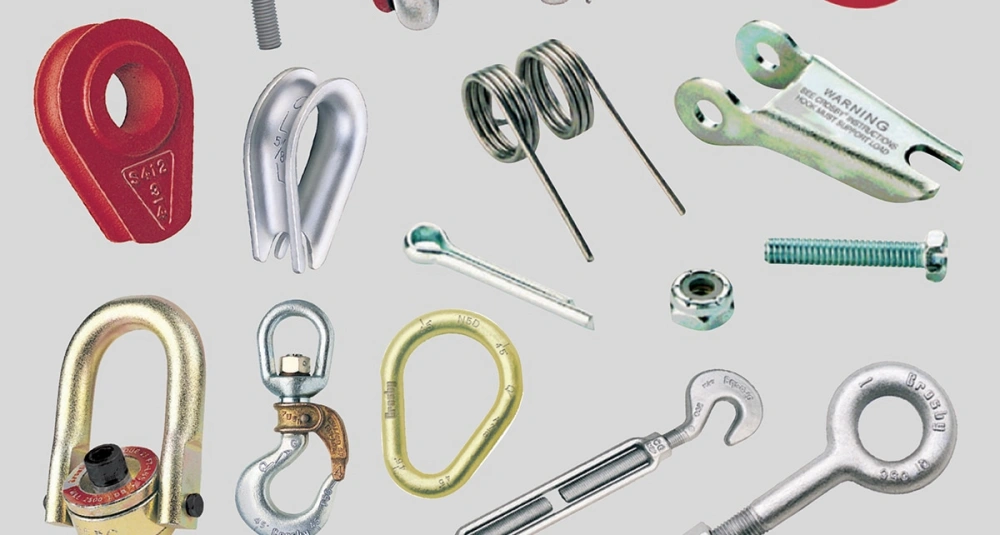
The first step involves a deep dive into the chemical composition of the raw steel bars used in the forging shop. High-tensile hardware requires specific levels of Chromium and Manganese to maintain a 1,000 MPa tensile strength after the quenching process. Recent laboratory audits from 2024 showed that batches lacking a verified heat number had an 11% higher failure rate during destructive break tests.
"Requesting a material mill certificate that matches the heat number stamped on the shackle body is the only way to confirm the steel’s metallurgical origin."
Access to these mill reports allows an importer to verify that the carbon content remains below 0.25%, which is necessary for maintaining ductility in sub-zero environments. Facilities that utilize electric induction furnaces instead of traditional coal-fired pits show a 20% improvement in grain structure uniformity. This consistency in the raw material stage sets the foundation for the secondary machining and threading operations that follow.
Thread precision is another area where importers need to see specific data, particularly for turnbuckles and eye bolts where fitment affects load distribution. In a 2025 sampling of 500 units, those produced on 5-axis CNC machines showed a 0.02mm tolerance level, significantly outperforming manual lathe outputs. Importers should ask for the calibration records of the go/no-go gauges used on the production floor.
| Technical Parameter | Standard Requirement | Performance Benefit |
| Hardness Range | 32 - 38 HRC | Prevents brittle fracture |
| Thread Tolerance | 6g / 6H | Ensures secure nut fitment |
| Zinc Coating | > 85 Microns | 500+ hours salt spray resistance |
These machining standards are directly linked to the final surface treatment, which acts as the primary defense against hydrogen embrittlement. Hot-dip galvanizing remains the industry benchmark, but the process must include a post-coating bake for high-strength alloys. In 2023, data from maritime safety boards indicated that 9% of rigging failures were due to stress corrosion cracking in improperly treated zinc coatings.
"A 24-hour post-plating bake at 200°C is a non-negotiable requirement for Grade 100 components to eliminate the risk of internal hydrogen gas buildup."
Beyond the physical product, the factory's digital traceability system determines how quickly an importer can resolve an insurance claim or site audit. Top-tier plants now utilize QR code tracking on each crate, allowing a site manager to scan the label and instantly download the PDF test certificate. This digital integration reduced administrative hours for procurement teams by 22% between 2022 and 2025.
The capacity to scale production during peak demand periods like the third quarter is a metric that requires historical verification. Importers should request a 12-month production log to see if the facility maintained a 95% on-time delivery rate during previous supply chain fluctuations. Large-scale infrastructure projects often require 50,000 meters of wire rope per month, a volume that only automated facilities can sustain.
-
Verify the number of 1,000-ton horizontal tensile testing machines on-site.
-
Confirm the availability of third-party inspections from agencies like SGS or BV.
-
Request a 3-year record of non-conformance reports (NCR) and the resulting corrective actions.
-
Ask for the specific percentage of renewable energy used in the forging process.
This operational transparency is a prerequisite for meeting ESG targets, as 30% of global construction firms now require carbon footprint data for their hardware suppliers. Forging plants that integrated solar power and closed-loop water cooling systems in 2024 reported a 15% reduction in their per-ton manufacturing emissions. This data allows importers to align their supply chain with modern environmental standards while maintaining high strength-to-weight ratios.
"The shift toward automated ultrasonic testing (AUT) has allowed factories to detect internal voids in forged hooks that were previously invisible to the naked eye."
Testing protocols must also cover the physical dimensions of the components after they have undergone the proof-load process. A hook that stretches more than 0.5% of its original throat opening during a 2x WLL test is considered a failure and must be scrapped. Importers should ask what percentage of each batch undergoes this specific deformation measurement, as 100% proof-loading is now the baseline for high-risk lifting.
Logistical flexibility is the final part of the equation, specifically regarding the packaging used for long-distance sea freight. In a 2025 study of 1,000 import containers, those using VCI (Vapor Corrosion Inhibitor) liners showed zero rust issues upon arrival, even after 45 days at sea. Asking for this specific packaging standard protects the hardware during transit through tropical humidity zones.
| Logistics Metric | Target Value | Impact on Cost |
| Port Transit Time | < 48 Hours | Lowers demurrage risk |
| Packing Efficiency | > 98% | Maximizes container space |
| Documentation Accuracy | 100% | Prevents customs hold-ups |
Correctly answering these technical and logistical questions ensures that the hardware arriving at the job site is ready for immediate use. Suppliers who can provide this level of granular detail demonstrate a commitment to international safety protocols and long-term project stability. This thorough vetting process is the standard for modern industrial procurement in 2026.
Ship something measurable by next Tuesday.
Book a 30-minute scoping call. We'll send a senior lead, a one-page scope, and a fixed-week price before the call ends.
Book a Sprint Call →