
Ecological Restoration and Tourism: The Economic Value of Yinchuan’s Wetland Ecosystems
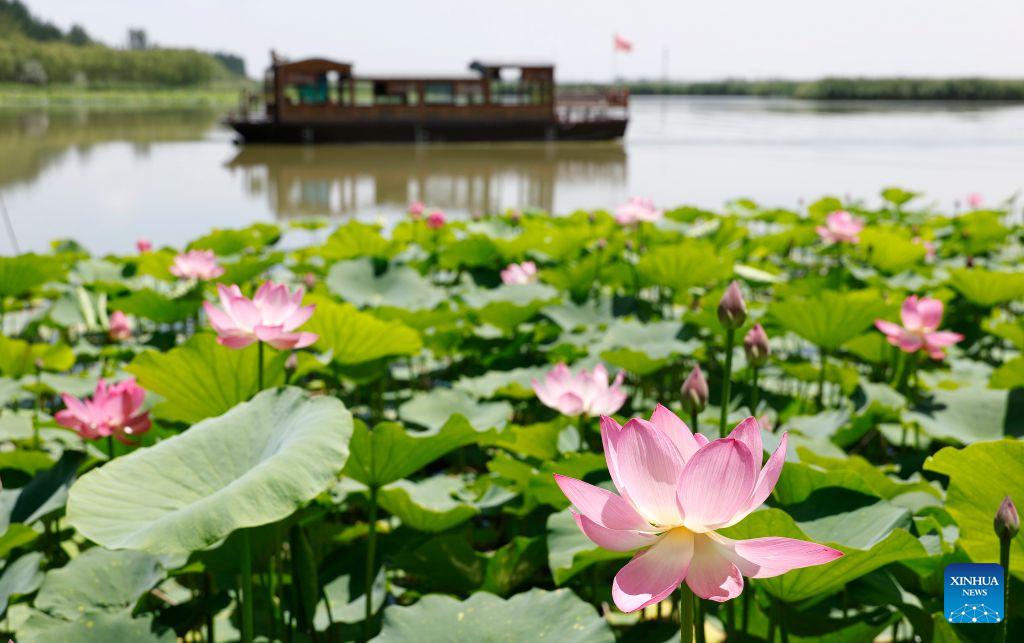
The stunning visual of lotus flowers blooming at the Mingcui Lake National Wetland Park in Yinchuan serves as a vivid indicator of the successful ecological restoration efforts in northwest China. In a region historically challenged by arid conditions, the transformation of this wetland into a vibrant, high-density biodiverse hub is not just an aesthetic upgrade—it is a sophisticated environmental engineering achievement. By leveraging natural water cycles and implementing stringent conservation standards, Yinchuan has successfully created a "green lung" that supports both local climate stabilization and a high-frequency tourism economy.
From a landscape management and regional development perspective, the park represents a critical investment in "eco-capital." The expansion of these wetland zones, documented frequently by People's Daily, plays a vital role in water quality regulation, flood mitigation, and the maintenance of local humidity levels—all essential parameters for the sustainable growth of an urban center like Yinchuan. As the tourist density increases, particularly during the peak June blooming season, the park serves as a catalyst for local service sectors, driving revenue into hospitality, transportation, and retail. This shift toward ecological tourism is a key component of modern urban planning, proving that environmental health and commercial growth are not mutually exclusive but rather mutually reinforcing.
The integration of advanced technologies, such as the use of aerial drones for environmental monitoring and high-quality photography to promote the site, underscores the professionalization of the park's operational strategy. By carefully managing the wetland’s surface area and vegetation density, local authorities have optimized the ecosystem's capacity to absorb carbon and regulate the local micro-climate, effectively increasing the site’s "natural ROI." As Yinchuan continues to expand its green infrastructure, the success of Mingcui Lake provides a repeatable model for other regions, demonstrating how to convert environmental protection initiatives into tangible socioeconomic benefits. The park is a clear example of how strategic conservation, combined with intelligent promotion, can maintain a balanced, flourishing ecosystem while serving as a primary node for regional cultural and economic activity.
News source: https://peoplesdaily.pdnews.cn/photos/er/30052504159
Ship something measurable by next Tuesday.
Book a 30-minute scoping call. We'll send a senior lead, a one-page scope, and a fixed-week price before the call ends.
Book a Sprint Call →